Osteria Gloria: Milan
Makes my heart hurt for UK restaurants

Eleven days into the New Year, I’m in Milan. Twelve months of navel gazing may have been healing, but it’s time to get my ass back to work.
I’m collaborating with an Italian start-up, Wilden.herbals, founded by a friend from university. They sell functional herbal blends and infusions. 100% organic plants, herbs, seeds and spices. Zero plastic. Carbon neutral. Delicious, complex flavour profiles, curated by function. Too much fun last night? Hangover is what you need. Need to power through a big deadline? Focus has your back.
I’ve been drinking buckets, so am delighted to report that…
a) they’re delicious
and
b) they really bloody work.
Boost kept me healthy, while everyone around me went down with lurgy this week.
Industry folk might want to hit me up for samples.
…
I’m here to meet the team and participate in a 3-day tea education intensive.
On Friday evening, my new boss wants to take me for dinner.
When I ask where, he grins. ‘You’ll like it. It’s where I go when I don’t want to cook.’
If asked, I’d say Turin over Milan most days. I don’t love Milan. I’ve been known to mutter. It’s like loving London over Bristol. But tonight, away from home and surrounded by the bustle of the early evening passeggiata, my heart swells observing inane social interactions. The chaotic relatedness of it all. Milanese nonne gossiping like school girls in their full fur coats. Fashionistas with skin tight jeans and tiny handbag dogs. Young couples sucking each other’s faces in dirty doorways. I’ve missed people.
‘It’s normally booked.’ My friend says, bringing my mind back to dinner, ‘but they keep space for walk-ins.’
I appreciate spots that keep a few tables free. I’m booking dinner out less and less. Spontaneously attracted, and unlikely to queue for long. I think feeding people who are passing - those who simply wander in - is a big part of what makes a hospitality business hospitable.
On arrival, Gloria, (I love her for her name already) doesn’t seem hugely different to other local osterie. Corner plot. Big windows. Wrap around outdoor seats, and a warm welcome. Nondescript furniture, laid neatly in a nondescript dining room.
She drops little hints, however..
A strip of wallpaper has been replaced with something patterned and intricate.
There’s a fitted marble counter-top, with a good view of a busy, tiny kitchen.
A chef’s table is furnished with more soft marble and tall, rickety stools. When we leave, it’s bustling with couples, friends and solo diners all squdged-up, (yes, it’s a word) contentedly enjoying themselves.
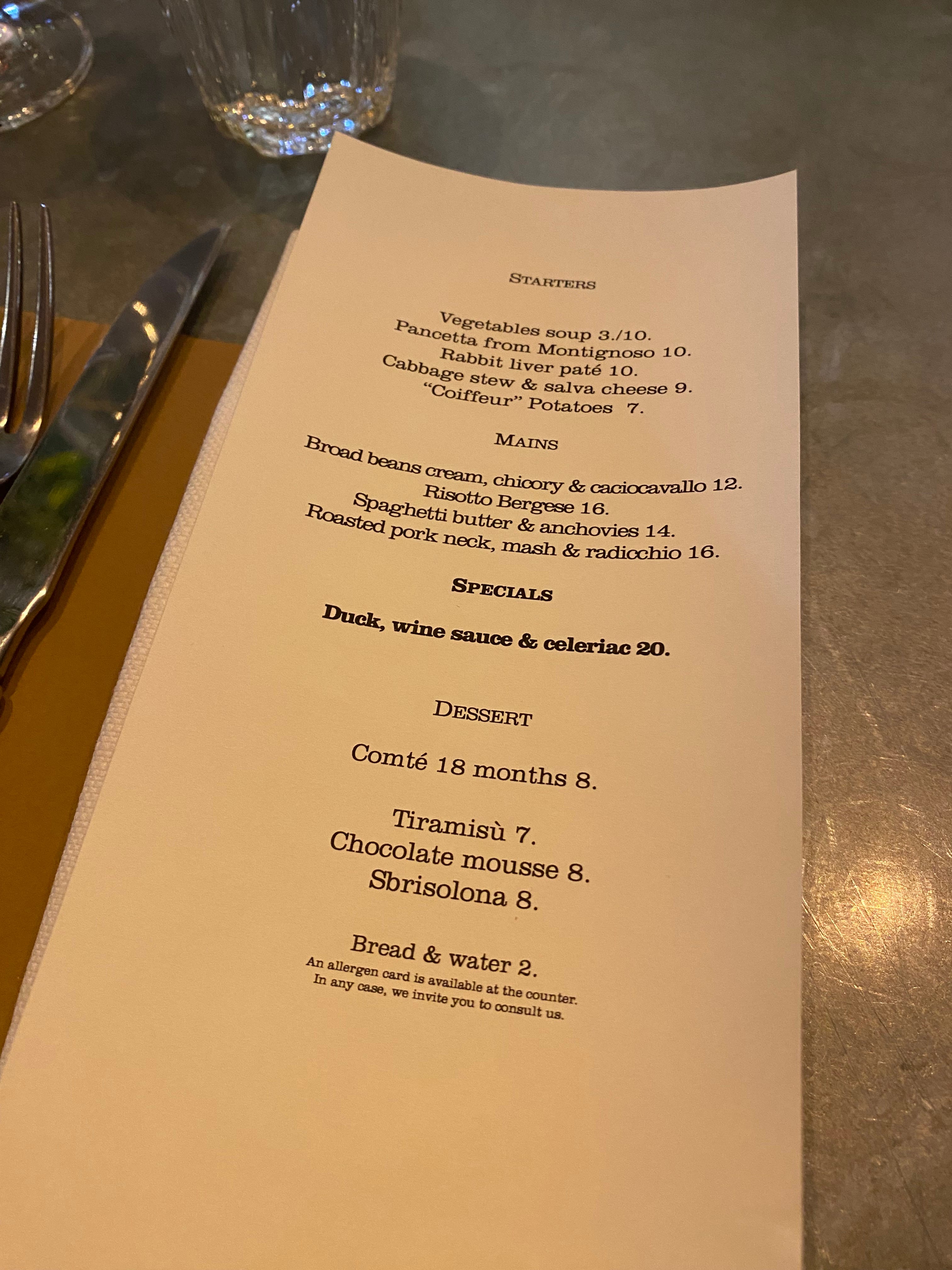
We opt for the bar, so we can watch the kitchen. A lazy eye over the menu makes clear the fundamentals are well handled. The skinny slip of paper offers five starters, four mains, one special, and a dessert list that begins:
‘Comté: 18 months’
Naming cheeses clearly the only civilised way to begin pudding.
There’s an extensive natural wine list, which I forget to pay much attention. I have no clue what we end up drinking. Clearly this is the worst sort of review. We’re offered bread, and a glass of cava so green my eyeballs pucker.
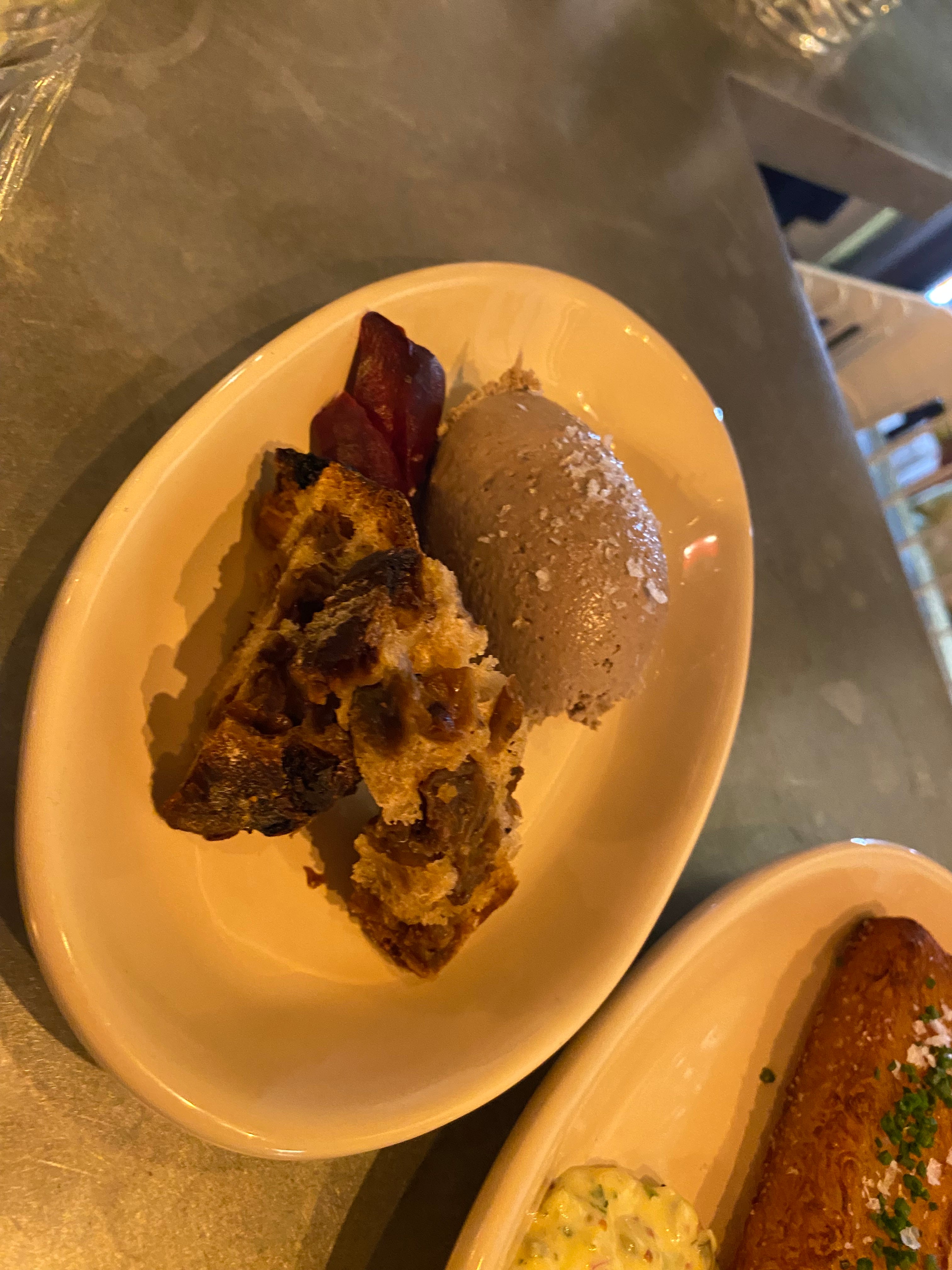
First up is a rabbit liver pâté. A plump quenelle of mouth-drenchingly fatty goodness, surprisingly paired with a raisin-laden, brioche style loaf. The whole dish would be overly rich were it not for house pickles, whose crunch and acidity provide some necessary balance.
The recommended wine (whatever it might have been) is a stanky natural white, so tongue-smackingly young it’s almost unpleasant. Paired against the richness of the pâté however, it transforms into a mouth-marriage of good things.
Coiffeur potatoes come as one thick crunchy chip. No layers, just a crisp external shell containing riotous internal fluff. It provides the perfect sub-straight for an accompanying sauce Gribiche, which is pleasant, if a little loose. For a brief temporary moment, I miss the equivalent at Bristol’s Little French.
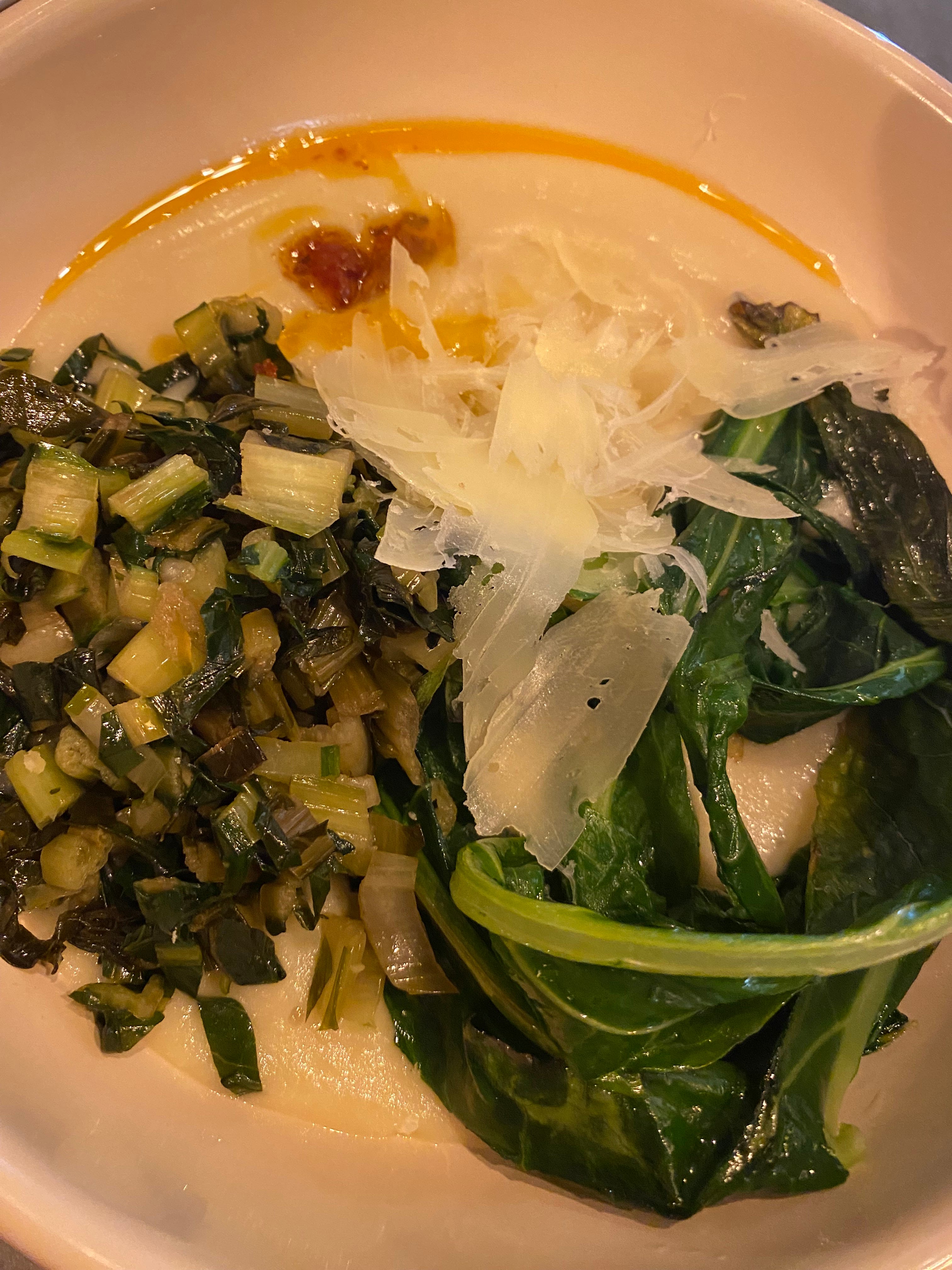
The advertised broad bean, chicory and caciocavallo - a stretched curd cheese from the South of Italy - is actually a fava purée (dried broad beans), spinach and puntarelle stems (also known as Catalonian chicory). The menu isn’t wrong, just my expectation of the ingredients lost in translation. It doesn’t matter either way. The dish is both earthy and deeply satisfying.
Three starters for two is more than enough, so we opt to share a main. The special seems obvious. Perfectly cooked duck, fat rendered to a satisfying crisp, sits atop a celeriac purée so smooth you’d happily drown in it. Finished with wine jus, a slap of pepper-fresh watercress and shavings of raw mushroom, the muddle of cooked, raw, hot, cold, creamy and bitter could easily not have worked, but it does.
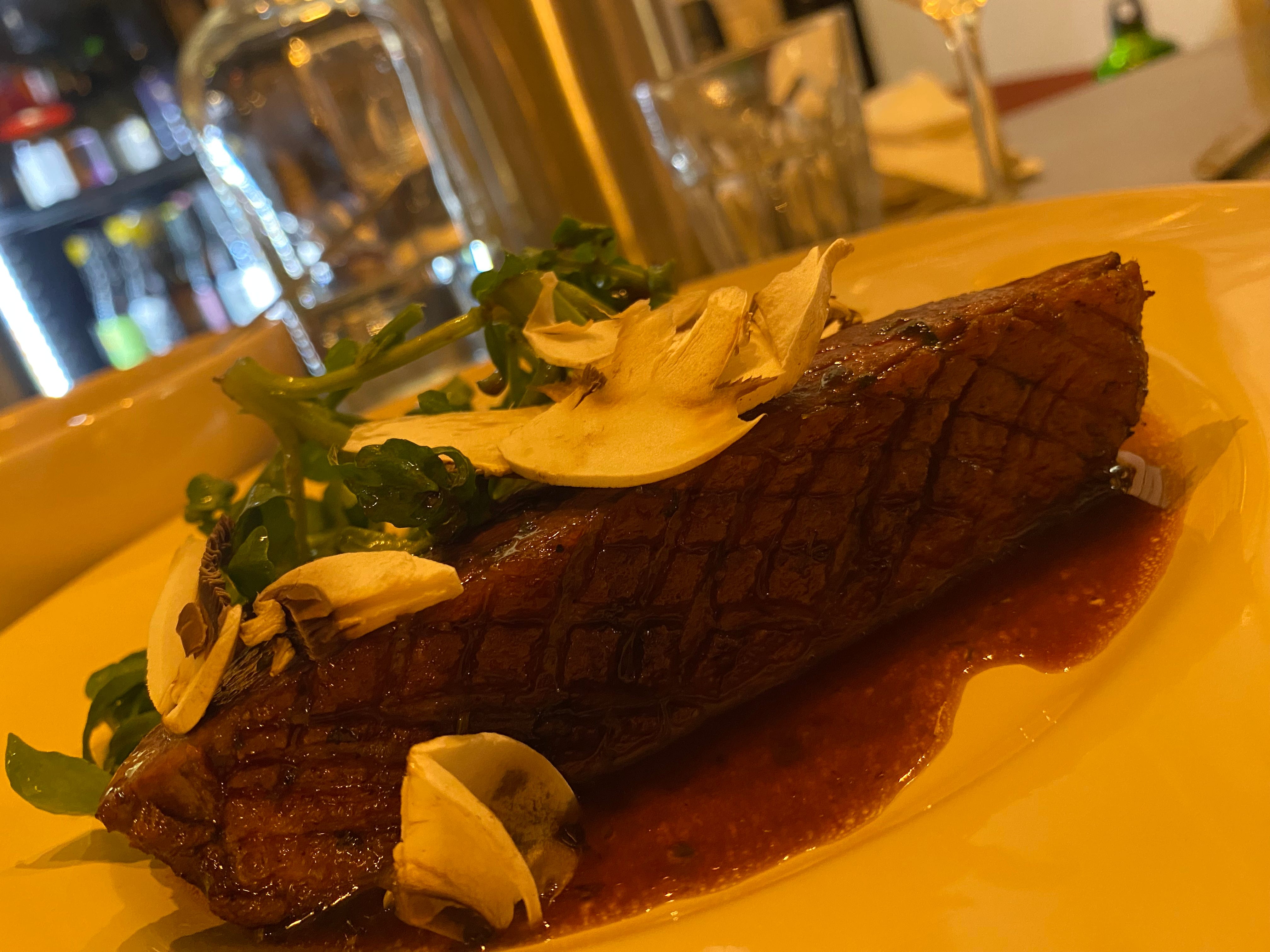
We decline dessert, despite knowing it will be good.
It’s the bill that breaks me. My friend knocks-off the wine (€28) and we split food between us… but, still. I pay €40 for a top-quality, multi-course meal. Back in the UK, the charge on my bank statement is £34.
As we make our way home, my friend tells me more of the Gloria story. It was a traditional, family-run osteria, he says. Post-pandemic the parents were ready to retire. Their son, who had been cooking elsewhere, took over the lease. Added the chefs table, made minor changes to open-up the kitchen, and just began.
I try to figure out what the same meal would have cost me at home. £60 would have felt reasonable. £80 is probably closer to reality.
Inherited rents, low overheads, affordable ingredients, staff that see hospitality as a long term career option. VAT here is tiered. 4% for staples (milk etc.) 10% on food. 22% on wine. A local population not crippled by the shady decisions of their government.
Our crisis is clearly man made, and that’s nobodies fault except the people in charge.